JBL Go 4 - Ultra-Portable, Waterproof and Dustproof Bluetooth Speaker, Big JBL Pro Sound with Punchy bass, 7-Hour Built-in Battery, Made in Part with Recycled Materials (Black)
$39.99 (as of March 1, 2026 03:03 GMT +00:00 - More infoProduct prices and availability are accurate as of the date/time indicated and are subject to change. Any price and availability information displayed on [relevant Amazon Site(s), as applicable] at the time of purchase will apply to the purchase of this product.)Choosing between Shopify vs Shopify Plus is one of the most common decisions growing e-commerce brands face. At first glance, the two platforms look similar — same interface, same ecosystem. But the differences between Shopify and Shopify Plus are significant enough to affect revenue, operations, and scalability.
This guide breaks down Shopify Plus vs Shopify across pricing, features, customization, and support — so you can make a clear, confident decision about which platform fits your business right now.

Summary
- Shopify suits small to mid-sized businesses with straightforward needs and budgets under $400/month.
- Shopify Plus is built for high-volume merchants doing $1M+ in annual revenue who need advanced customization and automation.
- The key differences between Shopify and Shopify Plus lie in checkout flexibility, API limits, multi-store management, and dedicated support.
- Shopify Plus pricing starts at ~$2,300/month — a 7–8x jump from standard Shopify plans.
- Knowing when to upgrade depends on your revenue, operational complexity, and growth trajectory.
Platform Overview: What Each Version Offers
What Is Shopify?
Shopify is a hosted e-commerce platform used by over 2 million merchants worldwide. It handles everything from storefront design and product management to payments and shipping — out of the box, with no server management required.
Standard Shopify plans (Basic, Shopify, and Advanced) scale in price and capabilities. They’re well-suited for brands launching their first store, managing a single sales channel, and processing up to a few thousand orders per month.
What Is Shopify Plus?
Shopify Plus is the enterprise tier of Shopify, purpose-built for high-growth merchants, large retail brands, and B2B sellers. It adds exclusive tools layered on top of everything standard Shopify offers — including a dedicated merchant success manager, higher API call limits, and deep checkout customization.
Merchants like Kylie Cosmetics, Allbirds, and Heinz have used Shopify Plus to manage flash sales, international storefronts, and complex fulfillment workflows at scale.
Shopify vs Shopify Plus: Pricing Breakdown
Standard Shopify Plan Costs
Shopify’s three main tiers are priced for different growth stages. Transaction fees apply if you use a third-party payment processor instead of Shopify Payments.
| Plan | Monthly Cost | Transaction Fee | Staff Accounts |
| Basic Shopify | $39/month | 2% (non-Shopify Pay) | 2 |
| Shopify | $105/month | 1% | 5 |
| Advanced Shopify | $399/month | 0.5% | 15 |
Shopify Plus Pricing
Shopify Plus pricing is not fixed. It typically starts at $2,300/month for stores doing under $800K/month in revenue. Above that threshold, pricing shifts to a revenue-share model — around 0.25% of monthly revenue.
For very high-volume merchants, this can result in costs well above $5,000/month. The Plus plan includes up to 10 online store expansions and 20 staff accounts as standard.
Now that pricing is clear, let’s look at where the real shopify vs shopify plus features gap shows up.

Shopify vs Shopify Plus Features: Side-by-Side
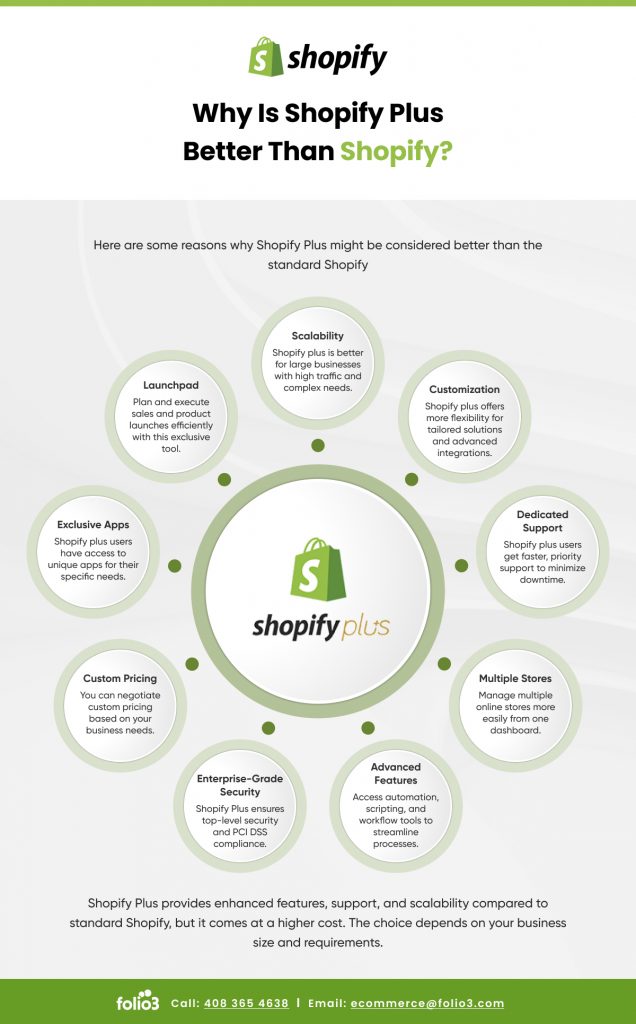
This is where the real differences between Shopify and Shopify Plus become clear. The gap isn’t just about limits — it’s about what you can build and automate.
| Feature | Shopify | Shopify Plus |
| Checkout customization | Limited (CSS only) | Full (Checkout Extensibility) |
| Script Editor / Functions | No | Yes |
| API rate limits | Standard (2 req/sec) | Enhanced (10x standard) |
| Expansion stores | 1 store | Up to 10 included |
| Launchpad (automation) | No | Yes |
| B2B/Wholesale portal | Manual setup | Native B2B features |
| Dedicated account manager | No | Yes |
| Shopify Flow (automation) | Basic | Advanced |
| Custom checkout logic | No | Yes |
| Transaction fees (Shopify Pay) | 0% | 0% |
Checkout Customization: A Critical Difference
Shopify Standard Checkout
On standard Shopify plans, you can modify checkout appearance through CSS and basic theme settings. You can add custom fields, but you cannot alter the core checkout logic — upsells, custom discount stacking, or post-purchase flows are limited to apps.
Shopify Plus Checkout Extensibility
Shopify Plus merchants get access to Checkout Extensibility — a framework that allows fully custom checkout experiences using UI extensions and Shopify Functions. This means you can build custom discount logic, loyalty point redemption, dynamic shipping rules, and subscription upsells directly in checkout.
This is one of the biggest differences between Shopify and Shopify Plus for brands focused on conversion rate optimization. Custom checkout flows can directly reduce cart abandonment and increase average order value.
Automation, B2B, and Multi-Store Management
Shopify Flow and Launchpad
Shopify Plus includes Launchpad — a tool that lets you automate flash sales, product launches, and promotional campaigns. You can schedule theme changes, price adjustments, and inventory unlocks all from a single dashboard.
Shopify Flow on Plus allows merchants to build complex automation workflows: tagging high-value customers, routing risky orders to manual review, auto-fulfilling digital products, and more. On standard plans, Flow access is significantly limited.
Native B2B Features
One angle that standard Shopify handles poorly is wholesale. With Shopify Plus, you get a native B2B portal that supports company accounts, custom price lists per customer, net payment terms, and PO-based checkout — all without third-party apps.
For businesses selling both direct-to-consumer and wholesale, this is a major operational advantage. The shopify plus vs shopify gap on B2B alone can justify the upgrade for the right merchant.
Expansion Stores
Shopify Plus includes up to 10 expansion storefronts under one contract. This lets international brands run localized storefronts for different regions — separate currencies, languages, product catalogs — while managing everything from one admin. Standard plans require a separate paid subscription per store.
Support and Account Management
| Support Type | Shopify | Shopify Plus |
| 24/7 live chat & email | Yes | Yes |
| Phone support | No | Yes |
| Dedicated account manager | No | Yes (Merchant Success Manager) |
| Priority queue | No | Yes |
| Onboarding support | Self-serve | Guided with launch support |
The Merchant Success Manager (MSM) assigned to Plus accounts is not just a support contact — they’re a strategic advisor who can connect you with Shopify’s partner ecosystem, run reviews of your tech stack, and flag emerging features relevant to your business.
For growing teams without a dedicated e-commerce operations resource, this alone can save meaningful time and reduce costly configuration mistakes.
When Should You Upgrade to Shopify Plus?
Revenue Threshold
The most common benchmark cited is $1M–$2M in annual revenue. At that stage, the cost of Shopify Plus is typically offset by lower transaction fees, operational time savings, and conversion improvements from better checkout control.
Operational Complexity
If you’re managing multiple brands, international storefronts, B2B accounts alongside DTC, or running frequent promotional campaigns, the tools in Shopify Plus directly reduce manual effort. If your team is using workarounds or stacking apps to replicate functionality that Plus includes natively, that’s a clear signal.
Missed Signals That Tell You It’s Time
- Checkout app stacking that slows load time or causes conflict issues
- Running 3+ separate Shopify stores for different regions or brands
- Wholesale business scaling, but no native pricing controls
- Flash sale or product launch coordination is breaking down manually
- Support tickets are taking too long to resolve during peak sales periods
For a detailed breakdown of what Shopify Plus includes at the platform level, see our guide on what is Shopify Plus.
If you’re already on standard Shopify and considering a move, our Shopify migration guide covers the key steps to migrate cleanly without disrupting your live store.
Common Misconceptions About Shopify Plus
“Shopify Plus Is Just a More Expensive Plan”
This is the most frequent misunderstanding. Shopify Plus isn’t a feature upgrade — it’s an entirely different operational layer. You’re paying for infrastructure that changes how your business runs: automation at scale, multi-store management, custom checkout logic, and enterprise support.
“You Need Shopify Plus for More Products or Traffic”
Shopify’s standard plans handle large product catalogs and significant traffic without issue. The reason to upgrade isn’t volume — it’s complexity. Merchants with 50 products but multi-region operations, wholesale accounts, and custom checkout needs benefit more from Plus than a merchant with 5,000 SKUs selling in a single market.
“The ROI Is Hard to Justify”
The ROI argument is more straightforward when you factor in the full picture: lower transaction fees, reduced app spend on tools Plus includes natively, faster support resolution, and conversion improvements from checkout customization. For merchants at the right stage, Plus typically pays for itself within 6–12 months.
Key Takeaways
- Shopify is the right choice for SMBs that need a reliable, affordable store with minimal operational complexity.
- Shopify Plus is built for merchants with $1M+ in annual revenue who need customization, automation, and multi-store management at scale.
- The differences between Shopify and Shopify Plus are most visible in checkout control, B2B features, and the automation toolset.
- Upgrading to Plus makes sense when app workarounds, manual processes, or growth constraints are limiting your team.
- For most fast-growing brands, the ROI on Plus becomes clear within the first year when the total cost of ownership is compared honestly.
Conclusion
The shopify vs shopify plus decision ultimately comes down to where your business is today — and where it needs to go. Standard Shopify is a powerful, capable platform for most merchants. But once operational complexity, revenue volume, or conversion requirements outgrow what it can do natively, Shopify Plus becomes the more cost-effective long-term choice.
If you’re unsure whether the upgrade makes sense for your store, talk to the Folio3 Shopify Plus team — we help merchants evaluate the right platform fit and execute migrations without disruption.
Frequently Asked Questions (FAQs)
What Is the Main Difference Between Shopify and Shopify Plus?
Shopify Plus adds checkout extensibility, higher API limits, Shopify Flow automation, native B2B tools, expansion stores, and a dedicated Merchant Success Manager. Standard Shopify lacks these enterprise-grade capabilities.
What Are the Shopify Plus vs Shopify Pricing Differences?
Standard Shopify plans range from $39 to $399/month. Shopify Plus starts at approximately $2,300/month or 0.25% of monthly revenue — whichever is higher — above the $800K/month revenue threshold.
Is Shopify Plus Worth It for Small Businesses?
No. Shopify Plus is designed for merchants doing $1M+ annually with complex operational needs. Smaller businesses get better value from Advanced Shopify at $399/month.
Can You Customize Checkout on Standard Shopify?
Standard Shopify allows basic CSS customization but no changes to checkout logic. Full checkout customization — custom discounts, upsells, and dynamic rules — requires Shopify Plus through Checkout Extensibility.
How Many Stores Can You Run on Shopify Plus?
Shopify Plus includes up to 10 expansion storefronts under a single contract. Standard Shopify requires a separate paid subscription for each additional store.
What Is Shopify Flow, and Is It Available on Standard Plans?
Shopify Flow is a no-code automation builder for tasks like order tagging, inventory alerts, and customer segmentation. Basic access is available on some standard plans, but the full feature set is a Shopify Plus exclusive.
When Should a Business Upgrade From Shopify to Shopify Plus?
Consider upgrading when annual revenue exceeds $1M, when you’re managing multiple storefronts or B2B accounts, or when checkout limitations are costing you conversions. Operational complexity is the clearest signal.

Source: https://ecommerce.folio3.com/blog/shopify-vs-shopify-plus/